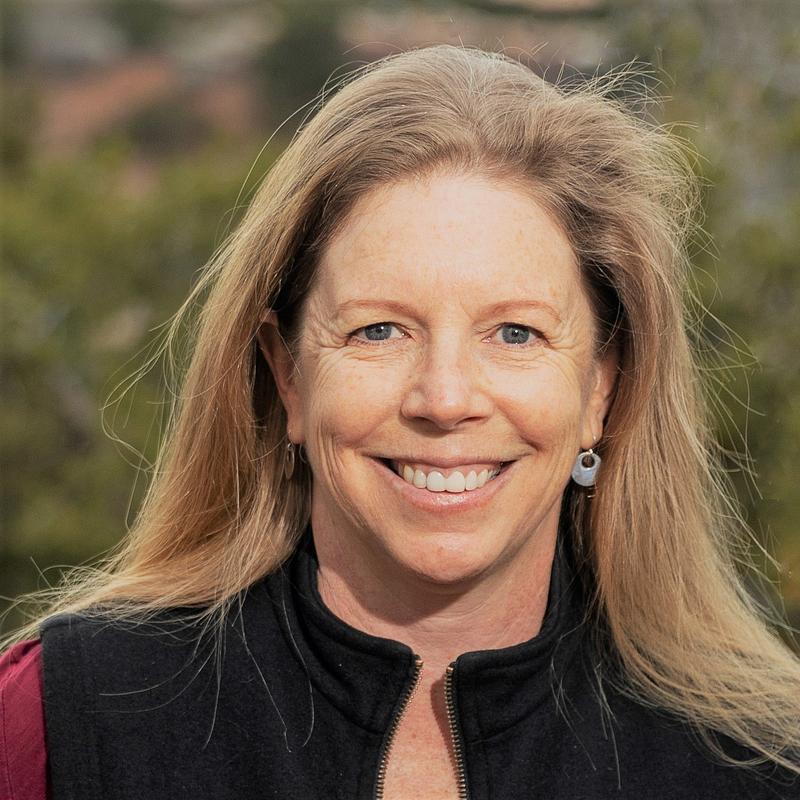
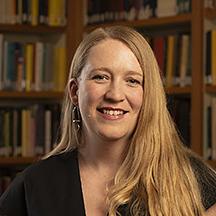
 Stefani Crabtree • Utah State University (US) • Santa Fe Institute Stefani Crabtree • Utah State University (US) • Santa Fe Institute
Stefani Crabtree, SFI External Professor, is Assistant Professor of Social-Environmental Modeling in the Department of Environment and Society of the Quinney College of Natural Resources at Utah State University. Her research applies complex systems science modeling methodologies (such as agent-based modeling and network science) to problems in social science and ecology.
|
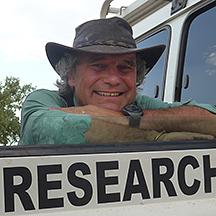 Andy Dobson • Princeton University (US) • Santa Fe Institute Andy Dobson • Princeton University (US) • Santa Fe Institute
Andy Dobson is a Professor in the Department of Ecology and Evolutionary Biology at Princeton University and External Faculty at SFI, and the Smithsonian Tropical Research Institute in Panama. His research focuses on the role that wildlife diseases play in the ecology and conservation of large wilderness ecosystems.
|
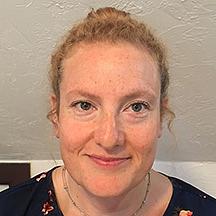 Zoe Finkel • Dalhousie University (Canada) Zoe Finkel • Dalhousie University (Canada)
Zoe Finkel is a Canada research chair in marine microbial macroecology and co-director of the Marine Macroecology and Biogeochemistry Lab at Dalhousie University. Her research is focused on finding and using physiological, ecological and evolutionary rules to understand and anticipate the interactions between marine organisms, especially plankton, on biogeochemistry and climate.
|
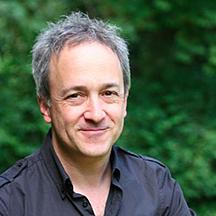 Michael E. Hochberg • University of Montpellier (France) • Santa Fe Institute Michael E. Hochberg • University of Montpellier (France) • Santa Fe Institute
Michael Hochberg, SFI External Professor, is Distinguished Research Director with the Centre National de la Recherche Scientifique and based at the University of Montpellier, France. He uses mathematical models and experiments to unravel complex ecological interactions with a strong focus on how environments influence diseases, particularly those associated with bacteria and viruses, and cancers.
|
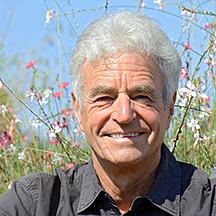 Michel Loreau • Centre National de la Recherche Scientifique (France) Michel Loreau • Centre National de la Recherche Scientifique (France)
Michel Loreau, is an emeritus researcher at the Centre National de la Recherche Scientifique (Moulis, France), an associate professor at Peking University (Beijing, China), a fellow of the Royal Society of Canada, a member of the Academia Europaea and an honorary member of the British Ecological Society. Over the past twenty years, his research has mainly focused on the relationship between biodiversity and ecosystem functioning, and on the ecological and societal consequences of biodiversity loss. He recently published the book "Nature That Makes Us Human."
|
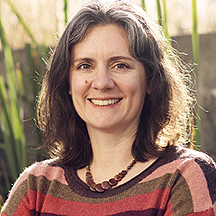 Mary I. O'Connor • University of British Columbia (Canada) • Santa Fe Institute Mary I. O'Connor • University of British Columbia (Canada) • Santa Fe Institute
Mary O'Connor, SFI External Professor, is a Professor in the Zoology Department and Director of the Biodiversity Research Centre at the University of British Columbia. O'Connor’s research focuses on biodiversity change, ecological and evolutionary effects of temperature, and the role of information in ecology.
|
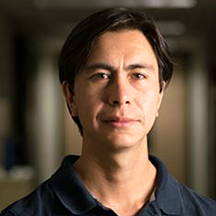 Serguei Saavedra • Massachusetts Institute of Technology (US) • Santa Fe Institute Serguei Saavedra • Massachusetts Institute of Technology (US) • Santa Fe Institute
Serguei Saavedra, SFI External Professor, is Associate Professor at MIT in the Department of Civil and Environmental Engineering and head of the Systems Ecology Group at MIT. Serguei is a theoretical ecologist and his work has centered on understanding the feasibility of ecological communities under changing environments using formal procedures of complex systems thinking, synthesis, and mathematical modeling.
|
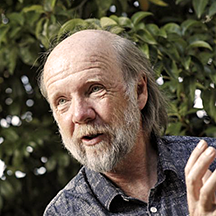 Marten Scheffer • Wageningen University (Netherlands) • Santa Fe Institute Marten Scheffer • Wageningen University (Netherlands) • Santa Fe Institute
Marten Scheffer, SFI External Professor, is a professor at Wageningen University, a member of the Royal Dutch Academy of Sciences, and a foreign associate of the National Academy of Sciences in the US. Scheffer is interested in unravelling the mechanisms that determine the stability and resilience of complex systems.
|
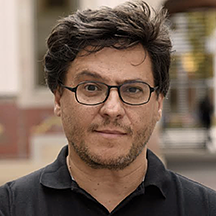 Ricard Solé • Universitat Pompeu Fabra (Spain) • Santa Fe Institute Ricard Solé • Universitat Pompeu Fabra (Spain) • Santa Fe Institute
Ricard Solé, SFI External Professor, is head of the Complex Systems Lab at the Universitat Pompeu Fabra and is also a member of the Council of the European Complex Systems Society. One of his main research interests is understanding the possible presence of universal patterns of organization in complex systems, from prebiotic replicators to evolved artificial objects.
|
|