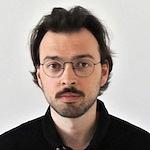
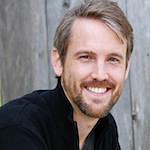
 Ronan Arthur • Stanford University (US) Ronan Arthur • Stanford University (US)
Ronan studies the interaction between the environment, infectious disease dynamics, and human behavior change, using techniques from geography and global health in empirical work on Ebola Virus Disease in Liberia, and techniques from mathematical biology and nonlinear dynamics to model these complex systems.
|
|
Carsten's scientific research focuses on the neurobiological and psychological underpinnings of cooperative decision making, conflict regulation, group decision making, and creativity.
|
 David Garcia • Graz University of Technology (AT) David Garcia • Graz University of Technology (AT)
David's research focuses on computational social science, designing models and analysing human behaviour through digital traces. His main work revolves around the topics of emotions, polarization, inequality, and privacy, combining statistical analyses of large datasets of online interaction with computational models.
|
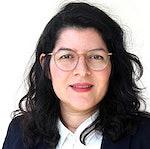 Fariba Karimi • Complexity Science Hub Vienna (AT) Fariba Karimi • Complexity Science Hub Vienna (AT)
Fariba’s research focuses on computational social science, the emergence of biases and inequality in networks and algorithms, and modeling human behavior. She combines statistical analyses of large datasets of online interactions with computational models, agent-based modeling, and network analysis.
|
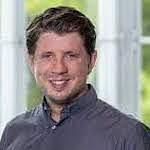 Peter Klimek • Medical University of Vienna (AT) Peter Klimek • Medical University of Vienna (AT)
Drawing from his expertise in complexity science, data science, statistics and physics, Peter's research aims to improve our understanding and ability to predict complex socio-economic systems, ranging from human disease over healthcare systems to economic and financial systems.
|
|
Steve is particularly interested in complex human-ecological systems, such as the Subak system of shared resource governance that has operated successfully in Bali for centuries. His research has helped understand intersections of linguistics and genetics, and protect the rights of the Cave Punan people to ancestral forests.
|
|
Han's general research theme is the formalization and testing of psychological theories in areas such as cognition, expertise, development, attitudes and intelligence, leveraging the back-and-forth between substantive theories represented in mathematical form and the close connection of those theories to statistical models.
|
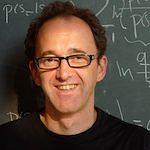 Matteo Marsili • International Centre for Theoretical Physics (IT) Matteo Marsili • International Centre for Theoretical Physics (IT)
Matteo is a theoretical physicist interested in understanding how collective behaviour – and unintended consequences – result from the interaction of simple units, be them particles in physics, neurons in a brain tissue or traders in financial markets.
|
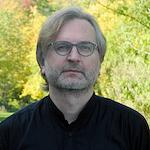 Eckehard Olbrich • Max Planck Institute for Mathematics in the Sciences (DE) Eckehard Olbrich • Max Planck Institute for Mathematics in the Sciences (DE)
Eckehard is interested in applying information theoretic approaches to define features of complex systems. A major area of his research is to model opinion dynamics and cultural conflict in European (political) spaces.
|
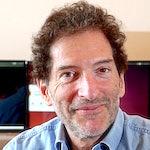 Sid Redner • Santa Fe Institute (US) Sid Redner • Santa Fe Institute (US)
Sid's research interests lie broadly in non-equilibrium statistical physics and its applications to a variety of phenomena. In recent years, he has devoted considerable effort to formulate and solve physics-based models of social dynamics.
|
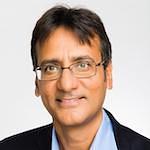 Rajiv Sethi • Columbia Univesity (US) Rajiv Sethi • Columbia Univesity (US)
Rajiv's research deals with information and beliefs. He has studied the manner in which stereotypes affect interactions among strangers, especially in relation to crime and the criminal justice system, and how individuals decide from whom to seek information, considering trade-offs between valuable information and transparent sources.
|
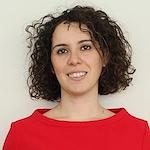 Roberta Sinatra • IT University Copenhagen (DK) Roberta Sinatra • IT University Copenhagen (DK)
Roberta's work focuses on quantitative understanding of social systems based on massive data sets. She develops and applies methods from the physics of complex systems, machine learning, and statistical analysis to social systems and networks.
|
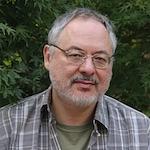 Peter Turchin • University of Connecticut (US) Peter Turchin • University of Connecticut (US)
Peter is a complexity scientist who works in the field of historical social science ("cliodynamics"). His research interests lie at the intersection of social and cultural evolution, historical macrosociology, economic history, mathematical modeling of long-term social processes, and the construction and analysis of historical databases.
|

 Mirta Galesic
 Henrik Olsson
 Stefan Thurner
 Jonas Dalege
 Tamara van der Does
 Maria del Rio Chanona
 Carsten De Dreu
 J. Stephen Lansing
 Han van der Maas
 Majid Benam